Scaling SaaS Architecture: Why Professional ABP.IO Development Outperforms Custom ASP.NET Core
Every CTO planning a new SaaS product faces the same choice: build multi-tenancy yourself on plain ASP.NET Core, or inherit it from ABP.IO on day one.
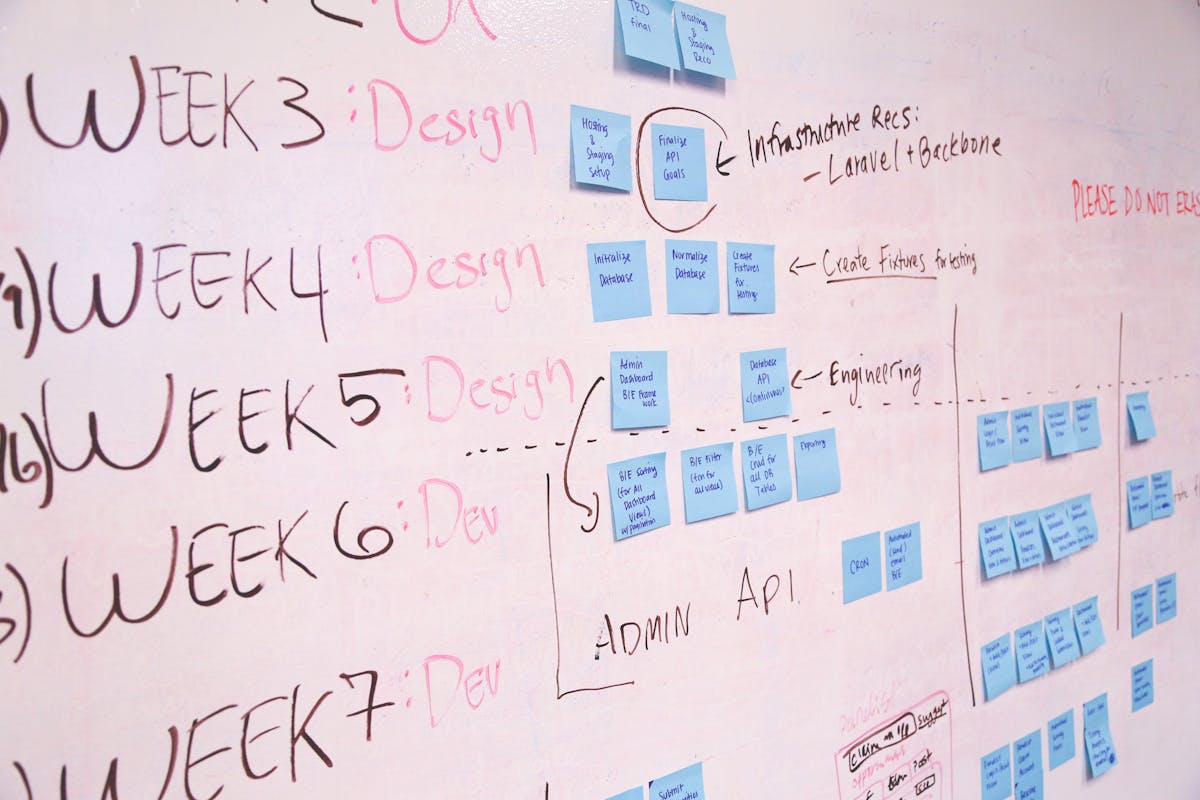
Every CTO planning a new SaaS product eventually faces the same fork in the road. Do you build the multi-tenant foundation yourself on plain ASP.NET Core, or do you build on ABP.IO and inherit that foundation on day one? We've built both, and we've rescued projects that chose the custom route and regretted it eighteen months later. This article makes the case for ABP.IO as the faster, cheaper, and ultimately more maintainable path for most SaaS products, and it's honest about the situations where custom ASP.NET Core still wins.
The hidden cost of building multi-tenancy yourself
Multi-tenancy sounds simple in a planning meeting. Add a tenant ID column, filter every query, done. In practice, a production-grade multi-tenant system needs tenant resolution middleware, tenant-aware caching, tenant-scoped background jobs, per-tenant feature flags, and a data isolation strategy that holds up under a security audit. Teams that build this from scratch on custom ASP.NET Core typically spend eight to twelve weeks getting the foundation right, and that estimate assumes nothing goes wrong with the first attempt at row-level security or connection string switching.
ABP.IO ships this foundation already built and already battle-tested across thousands of production deployments. Tenant resolution, data filtering, and per-tenant configuration work out of the box, which means your team's first sprint can focus on your actual product instead of infrastructure that has nothing to do with your competitive advantage. We regularly walk new clients through a side-by-side comparison of their planned custom architecture against what ABP.IO already provides, and the multi-tenancy layer alone usually justifies the framework choice before we even discuss the rest of the platform. We cover the full list of platform key features elsewhere on our site, and multi-tenancy sits near the top of that list for good reason.
Domain-Driven Design as an architectural safety net
ABP.IO enforces Domain-Driven Design conventions across your application layers, from domain entities and repositories through application services and DTOs. That structure feels restrictive to a developer used to writing whatever they want in a controller action, but it pays off directly as your team and your codebase grow. New developers can predict where a piece of logic lives without reading the entire codebase first. Code reviews get faster because reviewers already know the expected shape of a change. Refactoring a bounded context doesn't ripple unpredictably through unrelated parts of the application.
Custom ASP.NET Core projects can absolutely adopt DDD principles, and plenty do it well, but nothing enforces the discipline once deadline pressure hits. We've inherited more than one custom codebase where the original architecture diagram looked clean, but eighteen months of feature requests turned it into a tangle of direct database calls scattered across controllers. ABP's module boundaries make that kind of architectural erosion much harder to slip into, because the framework itself pushes back on shortcuts that skip the domain layer.
Real cost savings from ABP Studio and AI-assisted scaffolding
ABP Studio and the growing set of AI-assisted tooling around ABP.IO cut real time out of a typical sprint. Scaffolding a new CRUD module, complete with entity, repository, application service, DTOs, and a working Angular or Blazor UI, takes minutes instead of the half day a developer would spend writing that boilerplate by hand on a custom ASP.NET Core project. Multiply that across a product roadmap with dozens of entities and the time savings compound quickly.
We track this on client engagements directly. A module that would take a mid-level developer two to three days to build from scratch on custom ASP.NET Core, including tests and a basic UI, typically takes half that time when scaffolded through ABP Studio and then customized to match your business rules. That's not a marginal efficiency gain. Across a full product build, it routinely shifts the delivery timeline by weeks, which translates directly into earlier revenue for a SaaS product racing toward its first paying customers.
Designing modules that stay decoupled
The real skill in ABP.IO development isn't using the framework, it's designing custom application modules that stay decoupled from each other as the product grows. We structure every custom module around a clear public API surface, keep internal implementation details out of shared contracts, and avoid direct cross-module database access even when it would be the quicker shortcut in the moment. That discipline is what lets you later extract a module into its own microservice, sell an add-on module separately, or replace a vendor integration without rewriting the modules around it.
Plenty of teams new to ABP.IO build their first few modules well and then let boundaries blur once a deadline gets tight. Our review process specifically checks for that kind of module coupling before it ships, because unwinding it later on a live multi-tenant product costs far more than getting it right the first time. This is exactly the kind of practical, hands-on architecture guidance you'd expect from a team that has shipped ABP.IO products across finance, healthcare, and logistics, not just read the documentation.
When custom ASP.NET Core still makes sense
We won't pretend ABP.IO fits every project. A tiny internal tool with a handful of users, no multi-tenancy requirement, and a short expected lifespan often doesn't need the overhead of learning ABP's conventions. If your team has deep existing expertise in a specific custom architecture and the product genuinely has requirements that fight against ABP's opinions, a bespoke build can still be the right call. Our job during a discovery call is to give you an honest read on which category your project falls into, not to sell ABP.IO regardless of fit.
For the large majority of SaaS products we see, though, especially anything with multiple customer organizations, tiered subscription plans, or a roadmap that includes white-label deployments, ABP.IO's head start on multi-tenancy and DDD architecture outweighs the learning curve within the first quarter of development.
Planning for scale before you need it
One more factor tips the decision further toward ABP.IO for most SaaS founders: what happens once you sign your fiftieth tenant, or your five hundredth. A custom architecture that worked fine for ten pilot customers often needs a painful rewrite once tenant volume and data size grow, because shortcuts around caching, background job isolation, or database indexing strategies only reveal their limits under real load. ABP.IO's tenant resolution and caching layers already account for that growth curve, so the architecture you launch with stays close to the architecture you'll still run at scale, rather than a prototype you'll need to replace once the product actually succeeds.
Explore our full range of ABP.IO development services, or get in touch directly with a summary of your product plans, and we'll give you a straight answer on whether ABP.IO is the right foundation for what you're building.